
The sky is grimly grey. Fat raindrops drip from the rose hips and the last blackberries ‘spoilt’ by the devil now Michaelmas has passed.* I picked a few yesterday though – fat, black, juicy ones that’d escaped the rains reassuring myself that in the ‘old calendar’ the 10th October is ‘old’ Michaelmas Day so I should be safe.
It’s a time of change, of slowing down. As I watch through the study window it seems like all autumn weather has passed over the hill in just the few days between Michaelmas and St Francis’s Day. It’s a good time of year for saints: gentle Francis of Assisi has his feast on the 4th of October and the 29th September is the feast of St Michael.
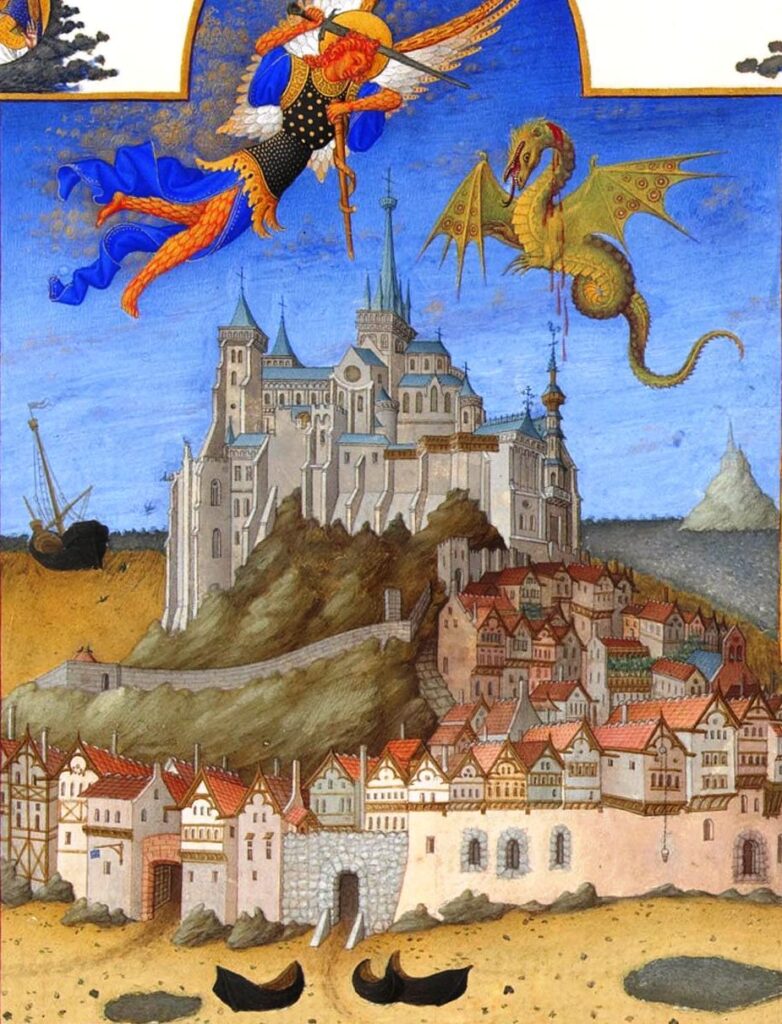
St Michael, the archangel and God’s messenger is most powerful and terrible. The warrior saint he was popular in the Middle Ages amongst soldiers and knights. His mass or ‘Michaelmas’ was once widely celebrated in Britain, a very old feast with a long tradition of sharing food, playing games and respecting those who have passed on (Michael is also known as the guardian of the souls of the dead).
In the Outer Hebrides Michael was regarded as the patron saint of the sea. On Michaelmas there were prayers followed by feasting. The women would bake a huge bannock** for all to share and then the community would solemnly form a procession to and around the local burial ground to pay respects to the ancestors. The day would end with an evening of dancing and singing.
Michaelmas is one of four quarter days, the others are Lady Day, Midsummer and Christmas, days for paying rent, going back to school, hiring servants (mop or hiring fairs) and paying debts. Michaelmas Fairs are still held in some parts such as Bishops Castle in Shropshire. It remains a farmer’s rent day and for some a time to share a meal with friends or family. Traditionally a goose would be eaten with apples and berries.
It’s the time of year for harvest suppers for many who still observe the old customs of celebrating the harvest coming home after a year’s hard labour. These suppers replaced the raucous harvest feasting so disapproved of in the nineteenth century. Traditionally the lord of the manor, in later times the farmer or landowner, would provide a feast for the workers. The Cornish priest, Reverend Hawker, of Morwenstow was so horrified by the debauchery and drunkenness of the locals at the harvest celebrations that he prescribed they be replaced by more sedate affairs, supervised by church. This caught on throughout Britain and today they still exist as a polite reminder of wilder times in our traditional calendar.
Back to Michael and even today there remains something mystic and compelling about the archangel. His provenance is lost in the deep, deep depths of time predating Christianity. He is usually portrayed as a warrior, slaying the devil who is depicted in the guise of a dragon or serpent. According to the Bible story Michael did not slay the devil but drove him out of heaven. The devil survived and came here to inflict torment upon the earth.
Michael is the chief archangel with power over other archangels and angels. He is a warrior priest, giving protection from demons and danger. Many churches were built and dedicated to him often on high hills and places (St Michael’s Mount). He’s mentioned in Judaism and the Koran. In Muslim tradition he is said to have green and saffron wings. Facing the uncertainty of the cold harsh months ahead what better saint was there for our ancestors to ask for safe passage through the winter or over the stormy seas of autumntide?
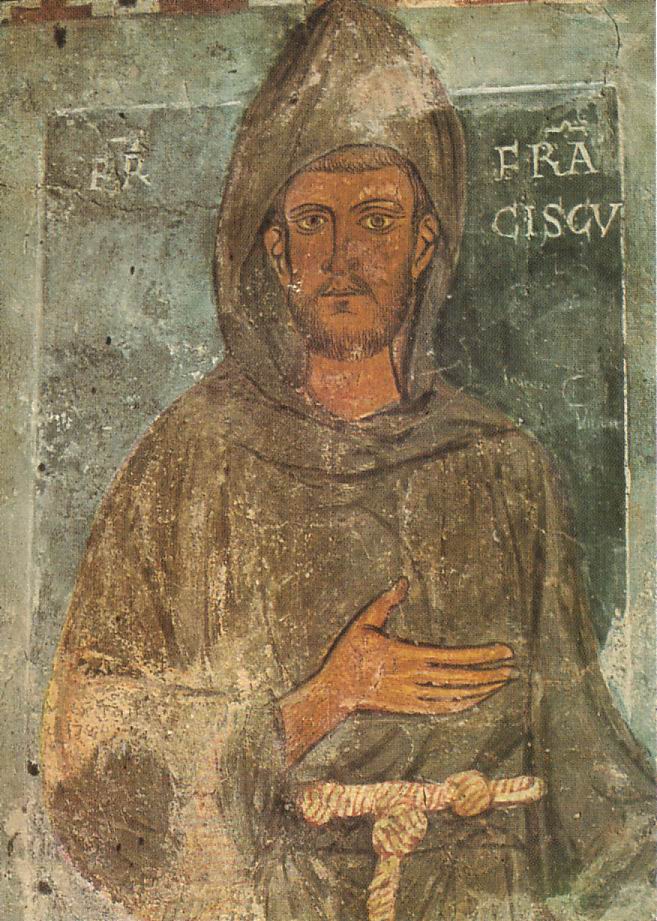
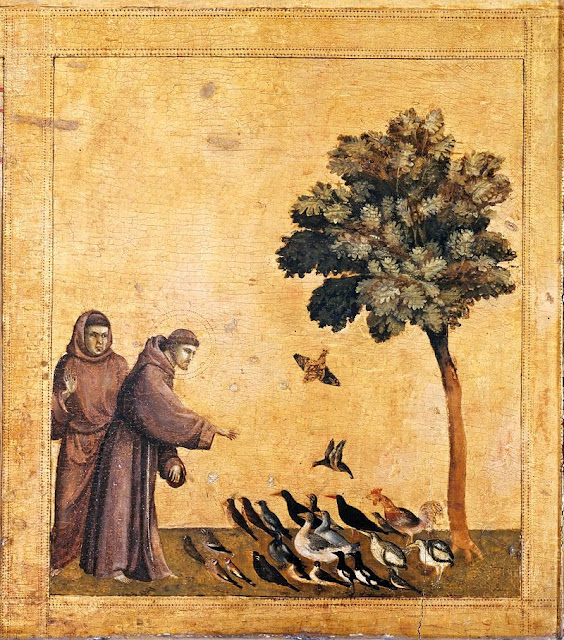
Then there is St Francis, a mortal, the patron saint of nature and of the environment. A mystic who gave up a comfortable life to take vows of poverty, chastity and charity and founded the order of Franciscans. Francis loved animals, especially birds and people today can take their pets to church on his feast day for a blessing. His connection and affinity with the environment and nature led to Pope John Paul II to declaring Francis as the patron saint of Ecology.
In folklore St Francis’s Day is when swallows prepare to migrate. They have done well this year and it has been a joy to see them gathering on the telegraph wires as they did in their hundreds during my childhood years. We still have fledglings in one of the barns. Many years ago, before migration of birds was better understood, people believed swallows either hid in holes or at the bottom of ponds until winter was over.
Now, as I write, the sun is shining, the blackberries spoilt by the rain if not the devil and the rosehips dance bright and jolly in the breeze under the weight of sparrows.
Michael and Francis remind us of earlier times when life was different in many ways, certainly more fragile without the comfort of warm housing and food most of us have experience of today. A symbiotic and caring relationship with our natural world and a more sympathetic understanding of it, was essential to our survival. Communities celebrate the changing seasons and learnt ways to survive. Sometimes this just wasn’t enough and powers greater than ourselves were appealed to in desperate and in hope.
Michael and Francis may be seen as ancient personifications of power and protection for all life on this planet. As the rains continue to fall, and the chaos of climate change takes its toll their appeal may be as relevant as ever.
~*~
*Folklore says that blackberries should not be picked after Michaelmas as the devil poisons them by spitting or peeing on them that day…
** Traditional Scottish flatbread
Pamela Thom-Rowe
October 2024